
Latest Developments in AI Hardware: What You Need to Know
Stay updated on the latest developments in AI hardware. Explore advanced AI chips, GPUs, NPUs, edge processors, high-performance computing, and innovations powering the next generation of artificial intelligence.
AI
6/23/20263 min read
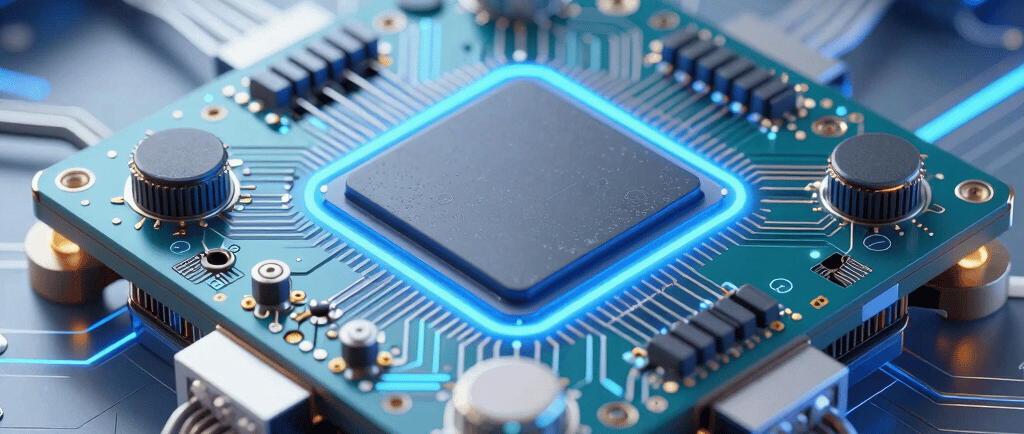
Latest in AI Hardware What is powering the next wave of innovation
Hey everybody. If you are even a tiny bit hooked into tech these days you have undoubtedly seen how rapidly AI hardware news is moving. “Every week there are new breakthroughs that could totally change the way we build, train and run AI systems. The AI hardware news is a busy place, with anything from enormous data center improvements to small, power-efficient circuits for your phone. For gadget fanatics, developers, or investors, it is more crucial than ever to keep in the loop.
Why AI Hardware Is Most Important
We’ve all witnessed the rise of generative AI tools, but behind the scenes it’s the hardware that makes the magic happen. Modern AI accelerators. Advances in GPUs. Specialised neural processors. Pushing the frontiers of what is possible Remember how many weeks it would take to train a huge language model on a single machine? Because of significant improvement in machine learning hardware, such timescales are reducing considerably.
In the realm of data center GPUs it is a race to cram greater performance into their chips while keeping power consumption in control. This is significant for AI supercomputers and large-scale high-performance computing installations. Power-efficient AI solutions are no longer a luxury, but a necessity with soaring energy requirements.
AI Hardware News: Big Names Shaking Things Up
No roundup of AI hardware news would be complete without a nod to the usual suspects. The latest designs from edge computing devices to cloud training clusters continue to be led by NVIDIA. They also concentrate on high memory bandwidth, NVLink and HBM memory technologies that keep them ahead in training accelerators and AI inference chips.
But it’s not one firm. AMD is going all in on the AMD Instinct family, making a strong play for the AI chip market. Intel's Intel Gaudi processors are gaining appeal too, particularly for cost-effective custom silicon installations. Then there are Google’s Tensor Processing Units (TPUs) which have proven game changers for internal workloads and are now more generally accessible services.
Startups are also challenging the status quo with neuromorphic computing techniques and FPGA for AI solutions. These ASIC design advancements offer customised performance for certain workloads, from on-device AI to industrial applications. AI chip startups are receiving substantial finance as everyone seeks for the next big efficiency breakthrough.
Latest Trends in AI Hardware News
One of the biggest trends in AI hardware news is the move to edge AI and on-device AI processing. Instead than uploading everything to the cloud, gadgets are growing smarter with discrete neural processing units. This implies quicker reaction times, greater privacy and reduced latency – great for anything from smart cameras to driverless cars.
Semiconductor innovations lie at the center of it all. We are seeing advances in chip manufacturing technologies that cram more transistors into smaller spaces, keeping Moore’s Law alive in spirit even as conventional scaling becomes difficult. Cooling solutions for AI are also growing fast, with liquid cooling, sophisticated heat sinks and intelligent thermal designs helping to manage the heat from these power-hungry monsters.
Another emerging discussion is around sustainable AI hardware. Environmental issues are front of mind, and makers are investigating greener materials, recyclable designs and more efficient structures. Generative AI hardware has to have both brute force and responsible power, and the industry is stepping up to the plate.
Other hot topics include research with quantum AI hardware that might revolutionise some kinds of processing, and neuromorphic chips that imitate the human brain more closely. PCIe interconnects and quicker networking are also key to linking all these pieces into unified AI supercomputers.
Next AI Hardware News
Looking forward, AI hardware market trends suggest an increasingly closer coupling of software and silicon. Look for additional next-gen AI processors that are designed for the AI inference workloads that dominate real-world applications. The key to unlocking performance in multi-chip systems will be stronger interconnects and improved memory bandwidth.
We’ll also see continuous rise in custom silicon for hyperscalers and for specialised use cases. Be it ASICs for certain models or FPGAs for flexible prototyping, the ability to customise hardware is becoming a huge plus.
If you follow the news of AI hardware, the next few months appear quite promising. The ripple effects will be seen in practically every sector, from data center growth to consumer products.
Last Words
The AI hardware news doesn’t seem to be slowing down. As machine learning hardware grows more advanced and affordable, we are inching toward AI that is not only strong, but also practical and sustainable. Watch for GPU improvements, neural processors, edge computing devices, and all the supporting tech like semiconductor innovations and cooling solutions for AI to go forward.
Where do you come down: Will the next great jump come from entrenched corporations or agile startups? Let us know what you think in the comments! If you’re as into this stuff as I am, be sure to bookmark this site and come back regularly for additional AI hardware news updates. We are building the future of intelligence, one chip at a time.
Join our community and stay connected through our social channels.
© 2026. All rights reserved.