
The Interplay Between Computers and Electrical Engineering
Explore computers and electrical engineering, covering computer systems, electronics, circuits, embedded systems, automation, AI, communication technologies, and innovations shaping the future of modern engineering.
TECHNOLOGY
7/25/20263 min read
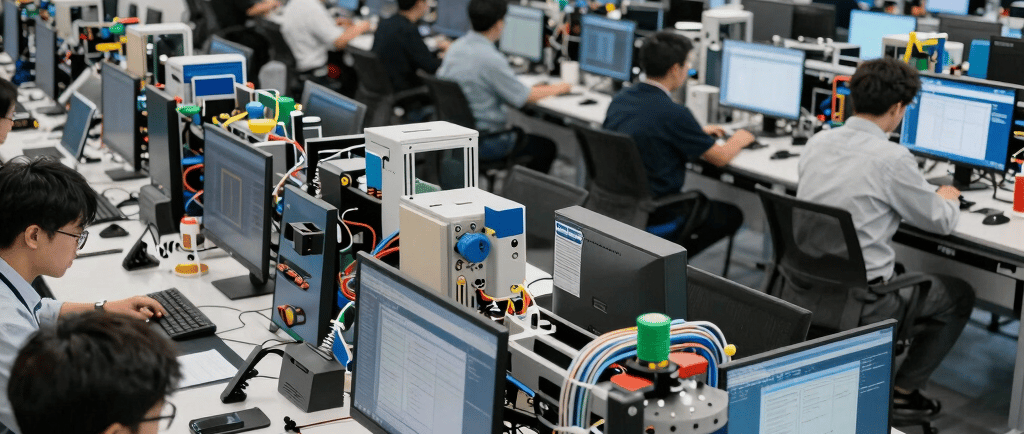
COMPUTERS & ELECTRONICS ENGINEERING – Circuits & Coding
Much of today’s most advanced technology is based on computer and electrical engineering. Be it the smartphone in your pocket or the electrical system that powers our cities, the innovations at the convergence of these two industries are defining how we live our lives every day. The study of computers and electrical engineering is the study of the interplay between hardware and software, electrical impulses that turn into usable information, and how engineers create systems that are faster, smaller, and more efficient.
Computers and Electrical Engineering: The Vital Connection
Ultimately, computers and electrical engineering are one and the same: electricity and logic. Electrical engineering offers you the physical base - circuits, semiconductors, integrated circuits, power electronics. Computer science and computer engineering make those physical parts into programmable systems. This overlap gave rise to microprocessors, microcontrollers and digital signal processors. And you cannot develop dependable computer hardware without solid knowledge of analog electronics, digital systems and semiconductor physics.
Computer and electrical engineers are usually concerned with computer architecture, VLSI design, embedded systems and real-time computing. They also apply control systems theory, signal processing and telecommunications ideas to enable machines to interact and respond intelligently. If you’re building a low-power IoT sensor node or a high-performance data center, the same fundamentals of electrical circuits and computational logic apply.
Main Intersection Fields
In several areas, the intimate relationship between computers and electrical engineering is evident:
- Embedded systems and microcontrollers are the brains behind everything from washing machines to medical equipment. The software working in the microcontroller . Designers should know the electrical characteristics of the sensor and actuator.
- FPGA and ASIC design demands a good understanding of digital logic, timing analysis and hardware-description languages. These talents are right in the middle of pure electrical engineering and computer hardware design.
- Digital control of power electronics and renewable energy systems is becoming increasingly critical. Engineers simulate switching converters, battery management systems and grid-tied inverters with computer modeling tools .
- Signal processing & communications Analog front-end design, digital algorithms. The job requirements are proficiency in both circuit theory and numerical methods, anything from 5G baseband processing to radar systems.
- Robotics and automation combine motors, sensors, power supplies and real-time software. All of them require excellent electrical and computational foundations. Computer vision, path planning and feedback control.
- Cyber-physical systems and the Internet of Things push the integration even farther. Devices must perceive the physical world, evaluate data at the device or cloud level and take action all while being power conscious and minimizing electromagnetic interference.
Also, careers in computers and electrical engineering include PCB design, electromagnetic compatibility, thermal management and reliability engineering in this field. Algorithms, data structures and operating systems knowledge is a good complement to programming skills in C, Python or hardware description languages.
Computer & Electrical Engineering skills that matter
In this transdisciplinary sector success usually requires both theoretical understanding and practical ability. Basic knowledge of circuit theory, electromagnetics and semiconductor devices still counts. At the same time, knowledge of computer architecture, parallel computing and system level design has become as important. Many engineers also study their abilities in machine learning applications for hardware, and hardware and software co-design, and verification approaches that enable detection of problems early in the development process.
And today’s tools further blur the borders. Engineers can migrate from abstract algorithms to real transistor-level implementations through simulation software, electronic design automation platforms and high-level synthesis tools. This is complemented with knowledge of networking protocols, cybersecurity challenges for embedded devices and energy-efficient methods to computing.
The Constant Change of Computer and Electrical Engineering
As AI accelerators, edge computing, electric vehicles and smart infrastructure all grow rapidly, the need for people with skills in both areas is significant. The progress in semiconductor manufacturing, new materials for power devices and new paradigms for computing such as neuromorphic hardware require the joint perspective provided by computers and electrical engineering.
As systems become more sophisticated, the ability to reason about the electrical behavior of a circuit and the computational behavior of the software running on it becomes an increasingly important asset. The design of next-generation processors, the construction of reliable industrial control systems, and the development of energy-efficient consumer electronics are all founded on concepts of computers and electrical engineering.
To conclude, computers and electrical engineering are the same discipline, not two independent fields. Both ends of the spectrum can be hit as the capability to do incredible and technical at the extreme end of tech which is possible now.
Join our community and stay connected through our social channels.
© 2026. All rights reserved.