
Understanding ERP and Cloud Computing: A Comprehensive Overview
Understand ERP and cloud computing with this comprehensive overview. Learn how cloud-based ERP systems improve business operations, scalability, data security, collaboration, and digital transformation.
TECHNOLOGY
6/21/20264 min read
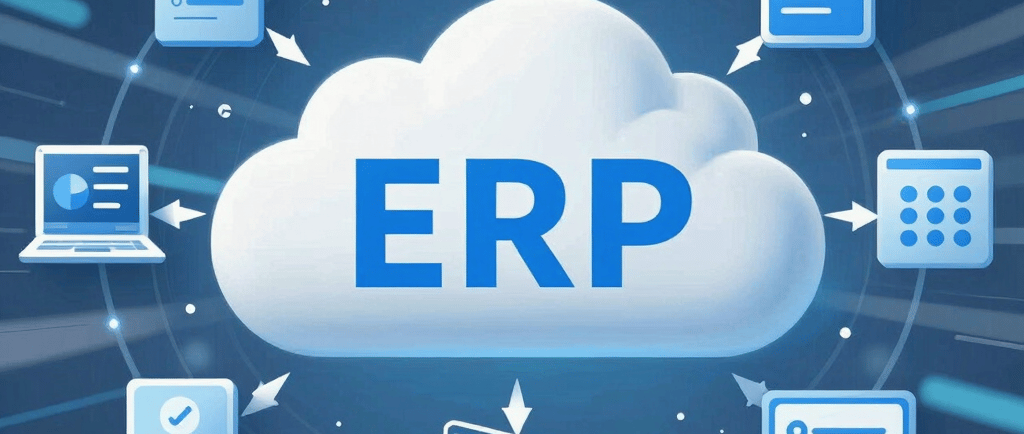
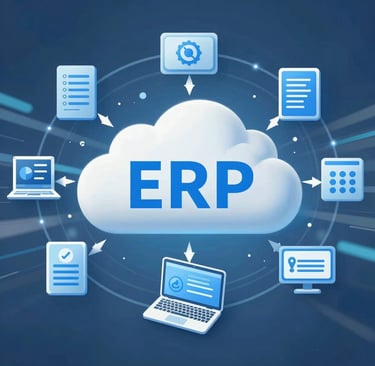
ERP with Cloud Computing: A Perfect Match for Today’s Business
Hello! If you’re in company today, you’ve undoubtedly heard the buzz about ERP and cloud computing. It’s no longer just tech jargon, it’s the mix that is helping organisations simplify processes, decrease costs and remain competitive in a fast-moving environment. Whether you’re a tiny startup or a huge corporation, knowing how ERP and cloud computing work together may be a game changer. In this essay I will simplify it all in simple English, provide genuine advantages, possible problems and why this coupling is only growing more significant.
What is ERP all about?
Getting back to the fundamentals. ERP (Enterprise Resource Planning) is the fundamental nervous system of your organization. It combines all your critical functions including finance and accounting, human resources, supply chain management, inventory control, project management and customer relationship management (CRM) into one system. Instead of using different spreadsheets and unrelated applications, everything works in real time.
Traditionally, ERP systems were run on local servers (On-Premise ERP) and needed a huge amount of upfront investment for hardware, maintenance and IT workers. But that’s where ERP and cloud computing make a difference.
Welcome to Cloud Computing
Cloud computing is the delivery of different computing services such as servers, storage, databases, networking, software, and analytics via the internet (“the cloud”). You pay for what you use, usually under a subscription model, and you can access anything from anywhere with an Internet connection. The most popular examples are SaaS (Software as a Service), PaaS (Platform as a Service), and IaaS (Infrastructure as a Service).
Cloud-based ERP solutions are the result of mixing ERP with cloud computing. These are not on your own servers they are on the cloud. These are the providers like SAP S/4HANA Cloud, Oracle Cloud ERP, Microsoft Dynamics 365, and NetSuite. They are meant to be scalable, flexible, and easy to use.
Why Companies Are Moving to Cloud ERP Solutions
The move to ERP and cloud computing isn’t hype, it’s based on genuine benefits. Here are some of the largest I’ve seen in action:
Scalability and Flexibility: Cloud ERP grows with your company. Want to add additional users in high seasons? Minutes. no additional hardware needed. This is a big thing for supply chain management and inventory control, when demand is variable.
Cost Effectiveness No more big capital costs. Cloud deployment methods enable you to move to predictable operational expenditures. Less IT overhead, lower total cost of ownership, no more fretting about server updates.
Business Intelligence & Real Time Analytics Cloud ERPs come with sophisticated dashboards, reporting tools and AI powered intelligence . You can zoom through KPIs for financial management, HR management stats or sales success. more intelligent and quicker decisions.
Remote Access and Collaboration: In today’s hybrid work environment, teams may log in from anywhere. Whether it’s field sales representatives, accountants working from home or managers monitoring inventory levels, it’s all available via mobile-friendly interfaces.
Improved Data Security and Compliance: Trustworthy cloud providers spend a lot of money on security measures, such as encryption, multi-factor authentication, and frequent backups. Features like catastrophe recovery and automated upgrades let you satisfy industry rules without doing anything.
Easy to Integrate: Cloud ERP plays good with other technologies – CRM systems, e-commerce platforms, marketing automation and even IoT devices for better manufacturing or logistics.
Automation and Customisation: Your boring jobs are automated, and your team has time for strategic work. Many systems also let you easily customise to meet your particular operations without a lot of code.
Other benefits include multi-tenancy design (many end-users share the infrastructure with security), quicker installation times in comparison to on-premise systems, and improved performance optimisation via automated upgrades.
Real World Impact Stories from the Field
“I’ve talked to business owners who have changed. One medium-sized manufacturer shifted its complete ERP system to the cloud. Within months they increased inventory accuracy by 40 percent, decreased order processing time and achieved more insight into vendor management. A other retail organization noticed a big increase in customer satisfaction due to speedier fulfilment after it put in place a cloud ERP for demand forecasting.
ERP and cloud computing are virtually always part of digital transformation efforts nowadays. Those organisations who have adopted hybrid cloud approaches are getting the best of both worlds, with the option to store sensitive data on-premise while harnessing the power of the cloud to do analytics and scale.
Possible Challenges and How to Solve Them
Of course, no technology is flawless. Cloud ERP migration could present issues with data transfer, change management with employees and concerns about internet dependency or vendor lock-in. Security is a concern but current suppliers have strong safeguards.
The trick? Pick the appropriate partner, organise your relocation well and invest in training. Test with a pilot for some modules such as finance management or HR management before committing fully. Many organisations may choose for a staggered adoption to minimise interruption.
The Future of ERP and Cloud Computing
Artificial intelligence, machine learning and predictive analytics in cloud ERP are expanding in terms of use going forward. Look for more voice-activated interfaces, smarter automation and richer IoT connection that gives you real-time insight over the supply chain.
Edge computing, serverless architectures and improved sustainability features (green data centres) are also gaining favour. Cloud-native ERP solutions will continue to be sought for by agile-focused businesses to drive quick innovation.
Does Cloud ERP Fit Your Business?
If you’re still stuck with outdated systems or juggling many tools, it may be time to look into ERP and cloud computing. The rewards — savings, scalability, real-time information and competitive edge — frequently exceed the initial effort.
Cloud-based ERP may alter the way you do business, no matter if you’re in manufacturing, retail, healthcare, finance or services. It enables everything from project management to compliance reporting and more.
Want to take the next step? Review your present procedures, speak to suppliers and see what a modern ERP system may do for your development. The future of company efficiency is here and it’s fuelled by ERP and cloud computing.
What do you reckon? Are you on cloud ERP yet? Comment below, I'd love to hear about your experiences!
Join our community and stay connected through our social channels.
© 2026. All rights reserved.