
Understanding Tribal Knowledge and Its Importance in Organizations
Understand tribal knowledge and its importance in organizations. Learn how capturing, documenting, and sharing employee expertise improves collaboration, continuity, productivity, and long-term organizational success.
KNOWLEDGE
6/15/20264 min read
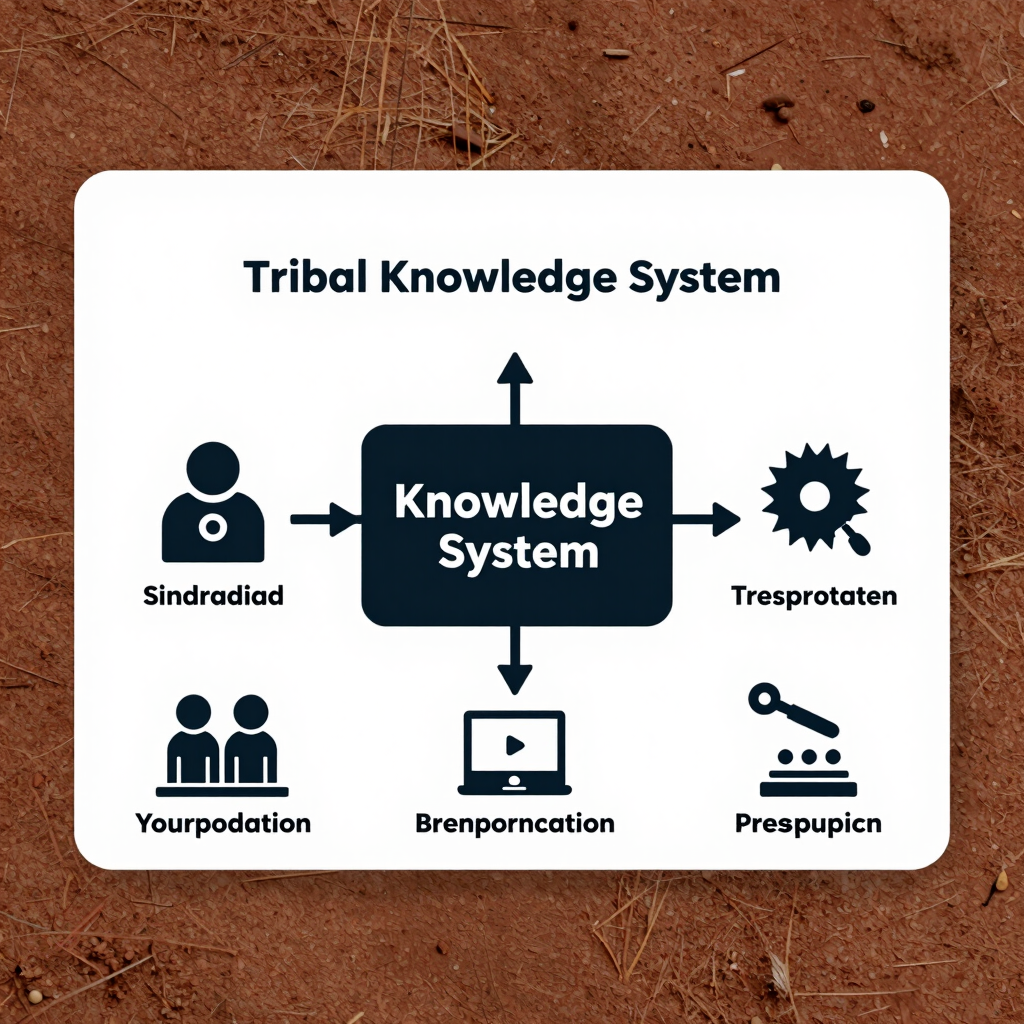
Tribal Knowledge: The Hidden Asset Every Organization Must Protect
What is Tribal Knowledge? Why is it such a big deal?
Every organization has information that never gets into manuals, databases, or official publications. It lives in the minds of seasoned professionals who have spent years troubleshooting, optimising procedures, and understanding how things really get done. This kind of information is known as tribal knowledge.
Tribal knowledge is the practical experience, understanding, skills and unwritten practices that workers pick up over time. This contains learnings from earlier projects, how to deal with challenges, client preferences, workflow shortcuts and operational information that is typically passed on in discussions rather than in written instructions.
Tribal knowledge may make organisations efficient, but if it is not recorded it can be a major threat. When a key person departs, retires or becomes unavailable, years of vital information might walk out the door with them.
What is Tribal Knowledge at Work?
In a lot of firms, tribal knowledge just happens. The people are trained via their routine duties, client contacts and working with their colleagues. Over time kids learn to do things better, to solve issues and to avoid making mistakes.”
A trained technician would know the quickest way to discover a reoccurring equipment failure. Customer service staff may have years of experience to teach them how to manage any worries a client has. This is a kind of tribal knowledge that seldom gets into the standard operating procedures.
Sometimes organisations are using this knowledge without realising how reliant they have gotten on particular people.
Common Examples of Tribal Wisdom
In practically every field and function there is tribal wisdom.
Typical instances are:
Unwritten rules of business
Informal process of work flow
Equipment troubleshooting techniques
Customer service abilities
Project management best practices
Internal communications channels
Choices for History Project
Know how to run.
Awareness of department
Dealing with technological challenges
Ideas for Process Improvement
Vendor Relationship Information
Organisational memory
Industry background
How we can collaborate
These are examples of how tribal knowledge might be woven into an institution.
Tribal Knowledge and Its Importance
When tribal information is properly disseminated, it has several benefits.
1. Faster Problem Solving
Usually, experienced individuals can rapidly discover a solution, since they have been in similar circumstances. They help teams avoid repeating the same mistakes twice. They are superior judges.
2. Toward Greater
Productivity Individuals with tribal knowledge are frequently able to get things done faster. They have the confidence to tackle obstacles via practical experience.
3. Improved Customer Service
Experienced personnel know what the consumer expects, wants and has had problems with in the past. With this information you develop better client interactions and boost the quality of service.
4. Additional Development
Organisations get value from personnel sharing lessons learned, new ideas and realistic suggestions. Operational excellence and economic success frequently comes from tribal wisdom.
Risks of over-dependence on Tribal Knowledge
Tribal wisdom is valuable but may create significant problems if you depend on it too much.
Lack of Wisdom
The loss of experienced individuals from the organization is one of the most severe dangers.
Inefficient Process
Official documentation lacks the necessary information for new hires to understand procedures.
Underperformance
If the processes are based on verbal commands, instead of written rules, then workers may accomplish the same thing in various ways.
Problems with training
Organisations that depend on tribal knowledge may have a longer onboarding process and higher training expenditures.
Business continuity risk
When critical information is vested in a few individuals the organization is subject to rupture via retirements, resignation or unexpected absences.
How to Capture Tribal Knowledge in Organisations
Knowledge management and documentation systems may be put in place by businesses to safeguard important skills and information.
Document Well
Document processes workflows troubleshooting tips lessons learnt A good knowledge base should include vital information.
Information exchange
Foster cooperation via team meetings, seminars, mentorship programs and cross-functional training.
Develop Standard Operating Procedures (SOPs)
Clearly defined SOPs lessen dependence on individual workers and provide uniformity to the operations.
Hold Knowledge Transfer Meeting
Organising systematic knowledge transfer meetings before experienced staff retire or leave the company, so that key ideas may be gathered.
Utilise a Knowledge Management System
Modern knowledge management systems enable firms to gather and record institutional knowledge, best practices, technical documentation and training materials.
Leading and protecting indigenous knowledge
“The leadership is the key to make sure tribal information is not hoarded but shared.
Managers are urged to cultivate open communication, constructive teamwork and continuous learning. Employees need to be allowed to swap abilities without endangering their job security or competitiveness.
Building a knowledge sharing culture may help organisations convert tribal wisdom into corporate knowledge for the benefit of all.
Best practices in Tribal Knowledge Management
Here are some strategies that firms may use to help boost their knowledge retention efforts:
Build a central knowledge base
Set up mentorship programs for employees
Promote a culture of recording
Publish project lessons learned report
Use software tools
Conduct periodic knowledge audits
Promote cross-training activities
Develop succession planning strategies
Create training materials for staff
Maintain institutional knowledge
These strategies are important to guarantee that important knowledge is retained for the next generation of workers.
Tribal Knowledge Management: The Next Frontier?
When companies experience digital revolution, tribal knowledge management becomes all the more vital. The advent of remote working, mobility of workers and fast technology development makes it important to collect and maintain employee knowledge
Companies that are managing tribal knowledge and turning it into codified organisational knowledge really have a competitive advantage. They increase operational efficiency, minimise risk, speed up employee onboarding and enhance long-term organisational resilience.
The future will belong to companies that see the strategic importance of knowledge and are willing to put measures in place to safeguard it.
Conclusion
Tribal knowledge is one of the most significant but least acknowledged assets in any company. Over time personnel acquire years of knowledge, practical know-how, problem solving capabilities and institutional memory.
Tribal wisdom is a significant concern yet undocumented information can be a wonderful advantage to efficiency and performance. This expertise has to be actively gathered, recorded and spread via relevant knowledge management systems.
Firms that focus on protecting tribal knowledge may maintain valuable skills, increase staff training, allow for company continuity, and fortify their basis for future success. Tribal knowledge management is not optional in today’s digital market, but an essential for long-term success.
Join our community and stay connected through our social channels.
© 2026. All rights reserved.